This pipeline computes the correlation between APOBRC groups and selected clinical features.
Testing the association between APOBEC groups identified by 2 different apobec score and 12 clinical features across 977 patients, 4 significant findings detected with Q value < 0.25.
-
3 subtypes identified in current cancer cohort by 'APOBEC MUTLOAD MINESTIMATE'. These subtypes correlate to 'HISTOLOGICAL_TYPE' and 'RACE'.
-
3 subtypes identified in current cancer cohort by 'APOBEC ENRICH'. These subtypes correlate to 'HISTOLOGICAL_TYPE' and 'RACE'.
Table 1. Get Full Table Overview of the association between APOBEC groups by 2 different APOBEC scores and 12 clinical features. Shown in the table are P values (Q values). Thresholded by Q value < 0.25, 4 significant findings detected.
|
Clinical Features |
Statistical Tests |
APOBEC MUTLOAD MINESTIMATE |
APOBEC ENRICH |
| Time to Death | logrank test |
0.244 (0.586) |
0.769 (0.951) |
| YEARS TO BIRTH | Kruskal-Wallis (anova) |
0.505 (0.818) |
0.232 (0.586) |
| PATHOLOGIC STAGE | Fisher's exact test |
0.539 (0.818) |
0.846 (0.951) |
| PATHOLOGY T STAGE | Fisher's exact test |
0.184 (0.586) |
0.545 (0.818) |
| PATHOLOGY N STAGE | Fisher's exact test |
0.0911 (0.437) |
0.872 (0.951) |
| PATHOLOGY M STAGE | Fisher's exact test |
0.825 (0.951) |
1 (1.00) |
| GENDER | Fisher's exact test |
0.42 (0.818) |
1 (1.00) |
| RADIATION THERAPY | Fisher's exact test |
0.457 (0.818) |
0.351 (0.765) |
| HISTOLOGICAL TYPE | Fisher's exact test |
0.00202 (0.0179) |
0.00179 (0.0179) |
| NUMBER OF LYMPH NODES | Kruskal-Wallis (anova) |
0.213 (0.586) |
0.171 (0.586) |
| RACE | Fisher's exact test |
0.00355 (0.0213) |
0.00224 (0.0179) |
| ETHNICITY | Fisher's exact test |
0.59 (0.833) |
0.728 (0.951) |
Table S1. Description of APOBEC group #1: 'APOBEC MUTLOAD MINESTIMATE'
| Cluster Labels | 0 | HIGH | LOW |
|---|---|---|---|
| Number of samples | 750 | 111 | 116 |
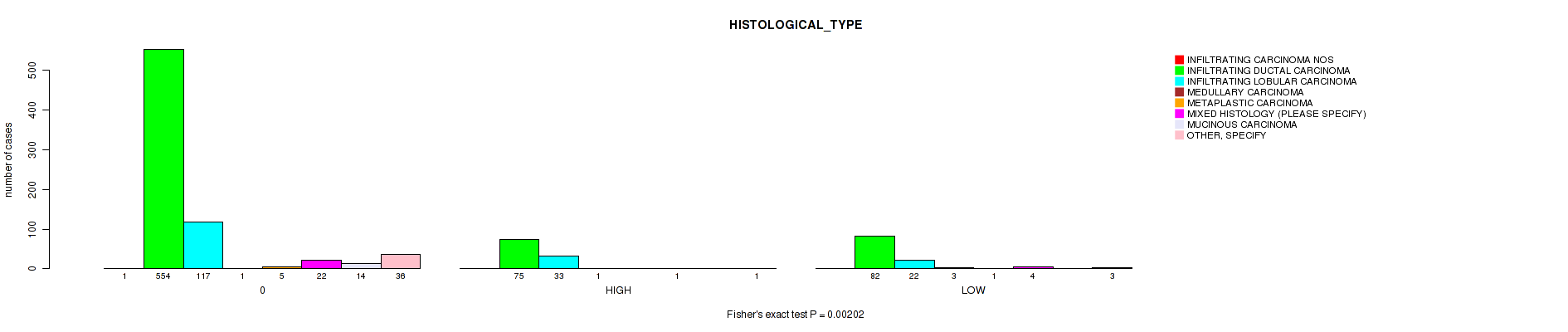
P value = 0.00202 (Fisher's exact test), Q value = 0.018
Table S2. Clustering Approach #1: 'APOBEC MUTLOAD MINESTIMATE' versus Clinical Feature #9: 'HISTOLOGICAL_TYPE'
| nPatients | INFILTRATING CARCINOMA NOS | INFILTRATING DUCTAL CARCINOMA | INFILTRATING LOBULAR CARCINOMA | MEDULLARY CARCINOMA | METAPLASTIC CARCINOMA | MIXED HISTOLOGY (PLEASE SPECIFY) | MUCINOUS CARCINOMA | OTHER, SPECIFY |
|---|---|---|---|---|---|---|---|---|
| ALL | 1 | 711 | 172 | 5 | 6 | 27 | 14 | 40 |
| 0 | 1 | 554 | 117 | 1 | 5 | 22 | 14 | 36 |
| HIGH | 0 | 75 | 33 | 1 | 0 | 1 | 0 | 1 |
| LOW | 0 | 82 | 22 | 3 | 1 | 4 | 0 | 3 |
Figure S1. Get High-res Image Clustering Approach #1: 'APOBEC MUTLOAD MINESTIMATE' versus Clinical Feature #9: 'HISTOLOGICAL_TYPE'
P value = 0.00355 (Fisher's exact test), Q value = 0.021
Table S3. Clustering Approach #1: 'APOBEC MUTLOAD MINESTIMATE' versus Clinical Feature #11: 'RACE'
| nPatients | AMERICAN INDIAN OR ALASKA NATIVE | ASIAN | BLACK OR AFRICAN AMERICAN | WHITE |
|---|---|---|---|---|
| ALL | 1 | 57 | 121 | 705 |
| 0 | 1 | 33 | 86 | 561 |
| HIGH | 0 | 11 | 15 | 72 |
| LOW | 0 | 13 | 20 | 72 |
Figure S2. Get High-res Image Clustering Approach #1: 'APOBEC MUTLOAD MINESTIMATE' versus Clinical Feature #11: 'RACE'
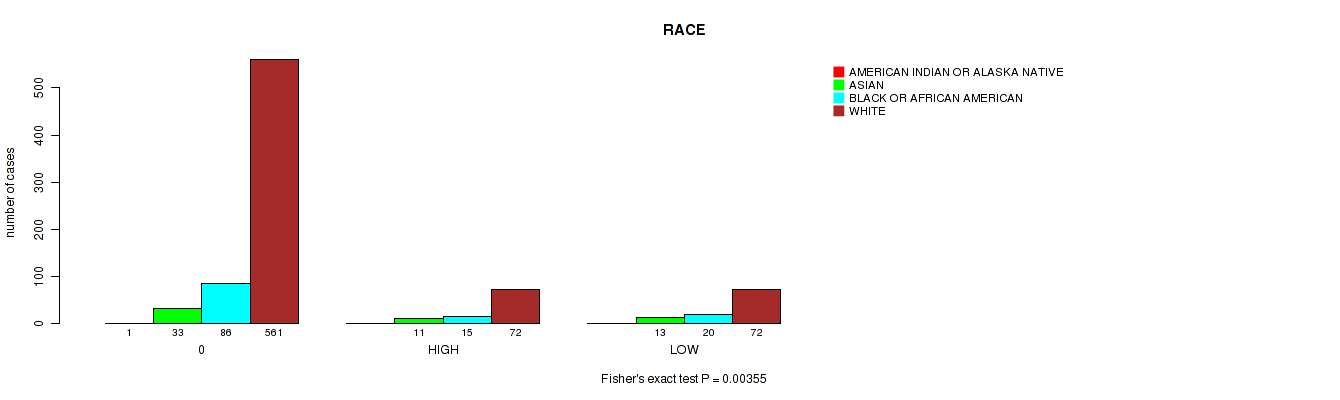
Table S4. Description of APOBEC group #2: 'APOBEC ENRICH'
| Cluster Labels | FC.HIGH.ENRICH | FC.LOW.ENRICH | FC.NO.ENRICH |
|---|---|---|---|
| Number of samples | 220 | 7 | 750 |
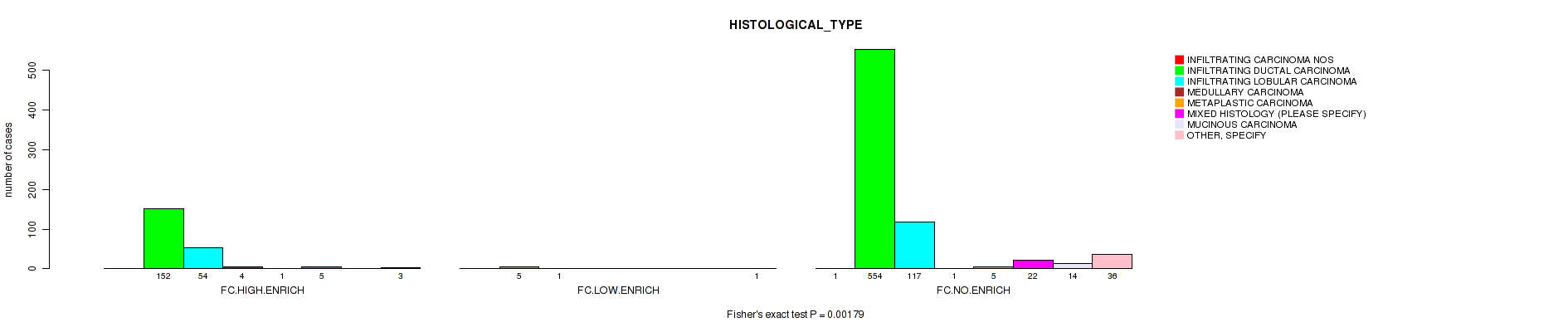
P value = 0.00179 (Fisher's exact test), Q value = 0.018
Table S5. Clustering Approach #2: 'APOBEC ENRICH' versus Clinical Feature #9: 'HISTOLOGICAL_TYPE'
| nPatients | INFILTRATING CARCINOMA NOS | INFILTRATING DUCTAL CARCINOMA | INFILTRATING LOBULAR CARCINOMA | MEDULLARY CARCINOMA | METAPLASTIC CARCINOMA | MIXED HISTOLOGY (PLEASE SPECIFY) | MUCINOUS CARCINOMA | OTHER, SPECIFY |
|---|---|---|---|---|---|---|---|---|
| ALL | 1 | 711 | 172 | 5 | 6 | 27 | 14 | 40 |
| FC.HIGH.ENRICH | 0 | 152 | 54 | 4 | 1 | 5 | 0 | 3 |
| FC.LOW.ENRICH | 0 | 5 | 1 | 0 | 0 | 0 | 0 | 1 |
| FC.NO.ENRICH | 1 | 554 | 117 | 1 | 5 | 22 | 14 | 36 |
Figure S3. Get High-res Image Clustering Approach #2: 'APOBEC ENRICH' versus Clinical Feature #9: 'HISTOLOGICAL_TYPE'
P value = 0.00224 (Fisher's exact test), Q value = 0.018
Table S6. Clustering Approach #2: 'APOBEC ENRICH' versus Clinical Feature #11: 'RACE'
| nPatients | AMERICAN INDIAN OR ALASKA NATIVE | ASIAN | BLACK OR AFRICAN AMERICAN | WHITE |
|---|---|---|---|---|
| ALL | 1 | 57 | 121 | 705 |
| FC.HIGH.ENRICH | 0 | 24 | 35 | 138 |
| FC.LOW.ENRICH | 0 | 0 | 0 | 6 |
| FC.NO.ENRICH | 1 | 33 | 86 | 561 |
Figure S4. Get High-res Image Clustering Approach #2: 'APOBEC ENRICH' versus Clinical Feature #11: 'RACE'

-
APOBEC groups file = /xchip/cga/gdac-prod/tcga-gdac/jobResults/APOBEC_Pipelines/BRCA-TP/22570937/APOBEC_clinical_corr_input_22572582/APOBEC_for_clinical.correlaion.input.categorical.txt
-
Clinical data file = /xchip/cga/gdac-prod/tcga-gdac/jobResults/Append_Data/BRCA-TP/22506573/BRCA-TP.merged_data.txt
-
Number of patients = 977
-
Number of selected clinical features = 12
APOBEC classification based on APOBEC_MutLoad_MinEstimate : a. APOBEC non group -- samples with zero value, b. APOBEC high group -- samples above median value in non zero samples, c. APOBEC low group -- samples below median value in non zero samples.
APOBEC classification based on APOBEC_enrich : a. No Enrichmment group -- all samples with BH_Fisher_p-value_tCw > 0.05, b. Low enrichment group -- samples with BH_Fisher_p-value_tCw = < 0.05 and APOBEC_enrich=<2, c. High enrichment group -- samples with BH_Fisher_p-value_tCw =< 0.05 and APOBEC_enrich>2.
For survival clinical features, the Kaplan-Meier survival curves of tumors with and without gene mutations were plotted and the statistical significance P values were estimated by logrank test (Bland and Altman 2004) using the 'survdiff' function in R
For binary clinical features, two-tailed Fisher's exact tests (Fisher 1922) were used to estimate the P values using the 'fisher.test' function in R
For multiple hypothesis correction, Q value is the False Discovery Rate (FDR) analogue of the P value (Benjamini and Hochberg 1995), defined as the minimum FDR at which the test may be called significant. We used the 'Benjamini and Hochberg' method of 'p.adjust' function in R to convert P values into Q values.
In addition to the links below, the full results of the analysis summarized in this report can also be downloaded programmatically using firehose_get, or interactively from either the Broad GDAC website or TCGA Data Coordination Center Portal.